What Are the Latest Trends in Public Safety Two-Way Radio?
What Are the Latest Trends in Public Safety Two-Way Radio?
What Are the Latest Trends in Public Safety Two-Way Radio?
Reliable communication sits at the center of every successful public safety response. Police officers, firefighters, and EMS professionals often make critical decisions in fast-moving and unpredictable situations. When coordination breaks down, the entire operation can suffer. For that reason, the technology behind modern public safety two-way radios continues to evolve.
Over the past decade, radio systems used by public safety agencies have undergone a significant transformation. Agencies are now prioritizing interoperability, data integration, ruggedized hardware, and improved coverage. The goal is simple: provide first responders with dependable communication tools that perform clearly and consistently in the most demanding environments.
Below are some of the most significant trends shaping public safety two-way radio technology today.
Where Public Safety Radio Technology Is Headed
Public safety radio technology continues to evolve as agencies look for better ways to coordinate personnel, share information, and maintain reliable communication in challenging environments. Improvements in network design, audio clarity, data integration, and system interoperability are reshaping how first responders use their radios in the field.
The following items highlight several of the most important developments currently influencing public safety two-way radios, along with a closer look at how these innovations are improving communication for police, fire, and EMS professionals.
Greater Interoperability Between Agencies
Large-scale emergencies rarely involve only one department. A structure fire may require assistance from multiple fire districts. Natural disasters often bring together police, EMS, emergency management agencies, and federal responders. Communication systems must support all of these groups without delays or compatibility problems.
Modern radio systems are increasingly designed to work across multiple jurisdictions and agencies. Shared radio networks and standardized frequency plans allow responders from different departments to communicate immediately when arriving at the same incident scene.
Interoperability also extends beyond traditional radio networks. Many modern platforms now support connections between land mobile radio systems and broadband communication systems. This hybrid approach ensures that voice communications remain reliable while also allowing additional data sharing between teams.
Integration of Voice and Data
Public safety two-way radios were once used almost exclusively for voice communication. Today, they support far more functionality.
Many public safety radios now allow responders to receive text messages, location data, incident alerts, and other digital information directly through their devices. Dispatchers can send updates without tying up voice channels, which improves efficiency during busy operations.
GPS tracking is another widely adopted feature. Command staff can monitor field unit locations in real time, improving situational awareness and response coordination. This capability is particularly valuable during large-scale incidents where multiple agencies are operating in different areas.
Enhanced Audio Performance in Noisy Environments
Public safety scenes are rarely quiet. Fire engines, alarms, sirens, heavy equipment, and crowd noise can easily interfere with radio communications. As a result, manufacturers have invested heavily in audio improvements.
New radio designs use advanced noise suppression technology to filter out background sound while preserving the user’s voice. Intelligent microphones can detect the direction of speech and focus audio capture accordingly. Some radios also adjust volume levels automatically depending on environmental noise levels.
These improvements reduce the chance that a critical message is misunderstood during a chaotic emergency response.
Increased Durability and Reliability
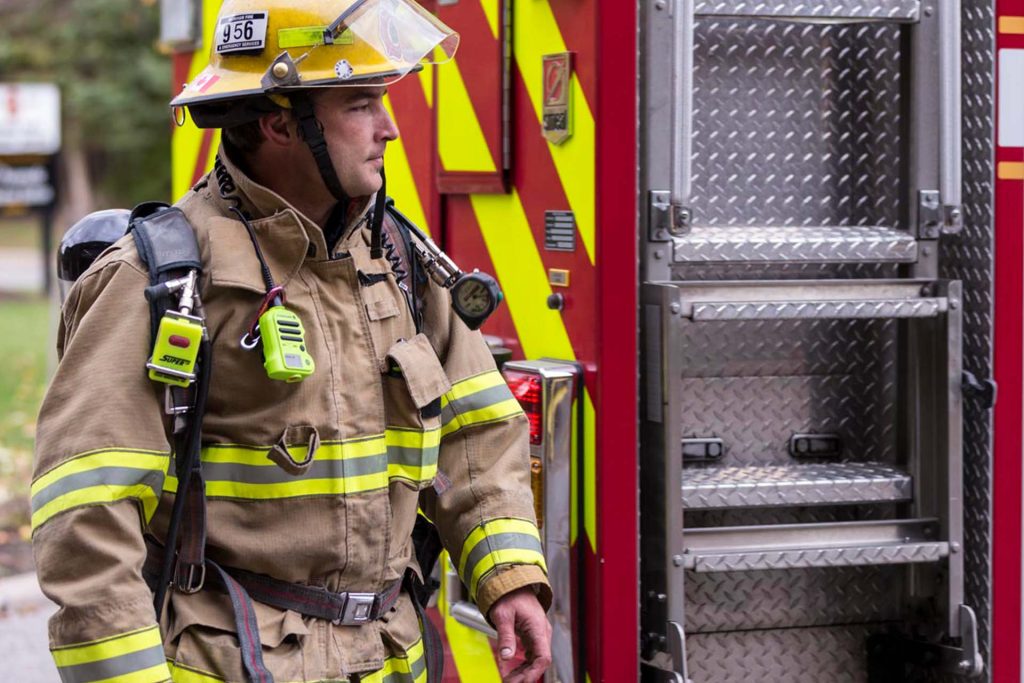
Public safety radios are exposed to harsh conditions daily. Firefighters encounter extreme heat and water. Police officers may operate in severe weather or physically demanding environments. EMS personnel frequently work in unpredictable real-world settings.
Modern radios are designed to withstand these challenges. Many models meet strict durability standards that ensure they remain operational after drops, vibration, and exposure to dust or water. Long battery life has also become a key priority, allowing responders to complete extended shifts without losing communication capability.
Reliability remains one of the most important qualities of any public safety communication device.
Improved Coverage and System Resilience
Another major focus within the public safety community involves improving communication coverage. Dead zones can place responders at risk, particularly in rural areas, underground structures, or large buildings.
New radio systems incorporate enhanced network designs that extend coverage and improve signal strength. Agencies are also investing in redundant infrastructure that keeps systems operational during power outages or network disruptions.
These upgrades help ensure that responders remain connected even during large-scale emergencies when communication networks face heavy demand.
The Role of the Motorola APX Radio Line
Among the most widely recognized radio platforms used by public safety agencies today is the Motorola Solutions APX Series. The APX family of public safety two-way radios was designed specifically for mission-critical communication. Police officers, firefighters, and EMS teams rely on these radios for their durability, clear audio, and advanced interoperability.
Many APX public safety radios support multiple frequency bands within a single device. This allows agencies to communicate across different systems without needing separate radios. For departments that regularly work alongside neighboring jurisdictions, this feature simplifies coordination during emergencies. The radios also include advanced audio technology that helps users communicate clearly in extremely loud environments. This capability is particularly valuable for firefighters working near heavy equipment or inside active fire scenes.
Another advantage involves the integration of voice and data features. Many APX models allow GPS tracking, emergency alert functions, and secure communication options that protect sensitive information during critical operations.
Durability is another reason these public safety radios are widely used. They are built to withstand demanding conditions, including extreme temperatures, exposure to water, and physical impact. For first responders who depend on their equipment during life-threatening situations, that level of reliability is essential. For many public safety agencies, the APX line has become a trusted communication platform that supports both day-to-day operations and large-scale emergency responses.
Experience Matters in Public Safety Communications
Selecting the right public safety two-way radios is only one part of the equation. Public safety agencies also need a communications partner that understands the operational challenges faced by first responders. This is where Prairie Mobile Communications provides real value. With decades of experience serving the public safety community, Prairie Mobile works closely with law enforcement, fire services, and EMS organizations to design communication systems that meet real-world operational demands.
An experienced communications provider does far more than supply equipment. They help agencies plan system coverage, configure interoperability across departments, support ongoing maintenance, and ensure radios perform reliably during emergencies. Public safety communication systems must function without hesitation. Every call, every transmission, and every piece of information can influence the outcome of an emergency response. Working with a knowledgeable provider ensures that agencies receive both the technology and the long-term support needed to keep their teams connected.
As communication technology continues to advance, partnerships with experienced providers like Prairie Mobile will remain essential to keeping first responders prepared for the challenges ahead.
Partner With Prairie Mobile for Public Safety Solutions
Prairie Mobile Communications has been supporting Canada’s police, fire, and EMS sectors for nearly 60 years. Prairie Mobile knows how to integrate public safety two-way radios, data, and other wireless technologies into a communication strategy that works seamlessly, no matter where the call takes you.
From traditional two-way radios to advanced wireless systems, Prairie Mobile provides solutions throughout British Columbia, Alberta, Saskatchewan, Manitoba, and Ontario, always focused on supporting first responders and the communities they protect.
Partner With Prairie Mobile Today!