Top Radios for Use in Construction
Top Radios for Use in Construction
Top Radios for Use in Construction
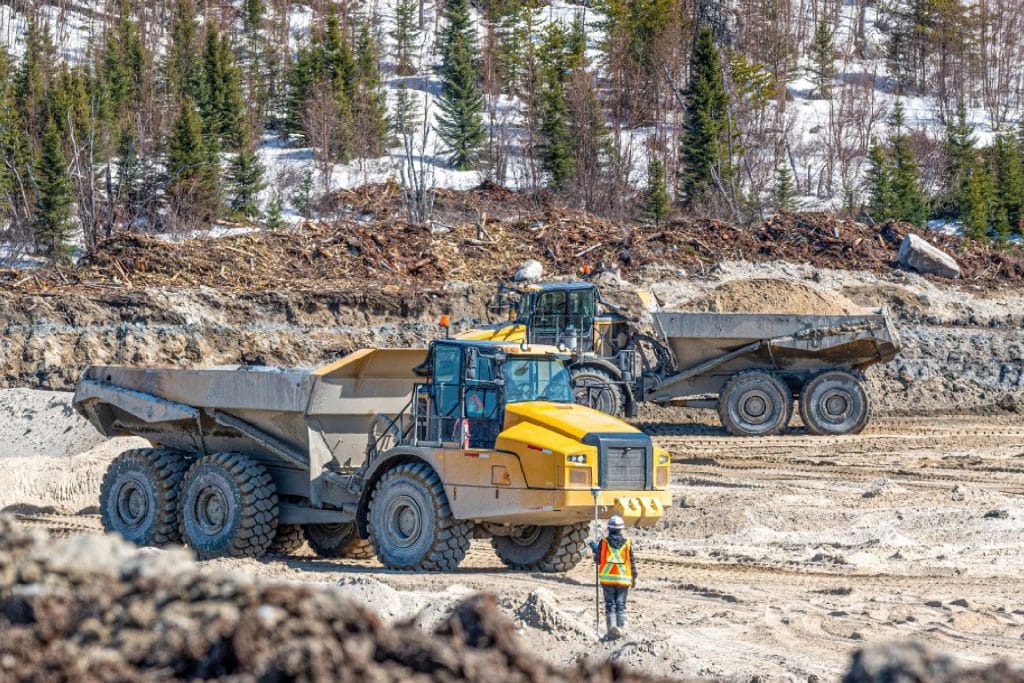
Visit any working construction job site, and you will notice something immediately. It is loud. Backup alarms. Rattling machinery in transit. Jackhammers. Crews yelling at one another. Good communication is not a luxury in such an environment; it helps ensure that projects are completed on schedule and, more importantly, that workers remain safe.
Choosing the right radios for construction in Canada is not about quickly grabbing whatever is on sale. Weather, terrain, crew size, and even provincial regulations must all be factored in. Wet, winter conditions in Alberta are not the same as dry, hot days on a high-rise building in Toronto. Radios for the construction site must match the work and conditions.
Below are some of the top-performing two-way radios construction teams rely on and why they work so well in the field.
Most Popular Radios For Construction Sites
A framing crew building homes in Saskatchewan will have different needs than a concrete team working on a multi-storey commercial structure in Vancouver. Matching the equipment to the environment prevents frustration, slowdowns, and even dangerous situations later.
Motorola MOTOTRBO™ R7
If durability and audio clarity are at the top of your list, the Motorola MOTOTRBO R7 is hard to beat. It was built for industrial environments where background noise can drown out weak audio. Crews like it because the sound cuts through. Even around heavy machinery. Even in high wind.
These Motorola construction radios are also sealed against dust and moisture, which matters on Canadian sites where rain, snow, and concrete dust are regular hazards. Battery life is strong enough to get through long shifts without scrambling for a charger at 3 p.m.
For larger commercial builds or infrastructure projects, this radio gives supervisors reliable site-wide coverage when paired with a properly designed repeater system.
Motorola CP200d
Another popular model among Motorola construction radios is the Motorola MOTOTRBO™ CP200d. It has been a steady workhorse radio on construction sites for years. It is straightforward, tough, and easy to train new hires on.
Not every project needs advanced digital features. Smaller crews doing residential framing or renovations often just need dependable push-to-talk communication. The CP200d delivers that without unnecessary complexity.
It also supports both analog and digital modes, which makes it useful if a company is gradually upgrading its system rather than replacing everything at once.
Kenwood NX-1200/1300
The Kenwood NX-1200/1300 is a good choice in teams that need good audio and versatile system compatibility. It is compatible with digital protocols widely used in Canada and enables clear audio even in high-noise environments.
It is small enough to be carried on a belt and tough enough to withstand falls and other rough treatments. That balance matters. Construction site radios do not lead a peaceful life.
ICOM F3400D Series IDAS UHF/VHF Portables
The ICOM F3400D Series is ICOM’s newest IDAS digital platform, designed for construction crews seeking advanced features in a job-ready, compact radio. It introduces convenient improvements, such as SD card support, a USB interface to facilitate programming, and built-in Bluetooth to support wireless accessories.
The bright colour display stays readable in low light and full sun, making it easy to check key information at a glance. For teams looking to step up their communication system without adding bulk or complexity, this series delivers modern performance in a durable, field-friendly design.
Tait TP9500
The Tait TP9500 is designed for construction teams that need flexibility without complicating matters. It supports both voice and data applications, making it a good fit for organizations that need more than just basic push-to-talk. The colour display is readable and easily visible, the audio is much cleaner, and the controls feel natural and easy to operate.
Like all Tait Tough equipment, it is made for demanding environments where communication cannot fail. Built-in Wi-Fi also enables wireless programming and fleet updates, simplifying management for larger systems.
Motorola TLK 110 (LTE Nationwide Radio)
Not every crew works on a single, contained site. Utility contractors, road crews, and project managers traveling between locations often need a Motorola construction radio that extends beyond line-of-sight.
That’s where LTE-based Motorola construction radios like the Motorola TLK 110 come into play. Instead of relying on traditional radio coverage, they operate over Canada’s cellular networks. That means communication across provinces — not just across a jobsite. For companies managing multiple crews across Western Canada or coordinating logistics between offices and field teams, this kind of coverage can simplify everything.
What Actually Matters on a Canadian Jobsite?
Specs are one thing. Real-world performance is another. A radio can look impressive on paper, but not perform in the harsh, real-world conditions of a construction job site. What is on paper does not matter if the audio gets swallowed by a nearby concrete saw or a passing dozer or if a radio gets dropped to the hard ground. In the real world, construction radios get covered in drywall dust. They get drenched in the rain. And they sit on truck cab dashboards when temperatures soar into the triple digits.
Tiny buttons are irritating for workers wearing thick gloves. Prolonged shifts will reveal inadequate batteries. This is where the difference lies with an inexpensive non-Motorola construction walkie-talkie. It is not on the spec sheet, but in the field.
When choosing construction radios, consider the following items.
- Audio clarity in high noise environments
- Battery life for long shifts
- Durability (drop resistance and IP ratings)
- Scalability of your system as your company expands
And remember, the “best” radio is not universal for all construction sites. It depends on how your particular crews operate day-to-day on any particular job.
Get the Right Fit the First Time
At Prairie Mobile Communications, we do not believe in one-size-fits-all recommendations. We ask questions first. How large is the site? How many users? Are you expanding? Working across provinces?
Then we build a communication system that makes sense. Because on a construction site, missed messages cost more than time. They cost momentum.
If you are evaluating radios for an upcoming project, talk to our team. We will help you choose appropriate equipment that works as hard as your crew does.
Partner With Prairie Mobile for Your Construction Communications Needs
Prairie Mobile has been supporting Canada’s construction industry for nearly 60 years. Prairie Mobile knows how to integrate two-way radio, data, video and other wireless systems into a communication strategy that works seamlessly, no matter where the job takes you.
From traditional two-way radios to advanced communication systems, Prairie Mobile provides solutions throughout British Columbia, Alberta, Saskatchewan, Manitoba, and Ontario, always focused on supporting our customers and growing alongside their needs.
Partner With PMC Today!