Transparency and Accuracy Through Body-Worn Cameras
From security teams in high-stakes environments to frontline workers handling unpredictable situations, professionals across sectors know how quickly things can shift. A standard inspection can escalate. A routine interaction can take an unexpected turn. And when it does, accurate documentation is critical, not just for accountability, but for training, operations, and trust.
Body-worn cameras provide that clarity. They offer an objective record of events, capturing context and detail that might otherwise be lost or disputed. Whether in healthcare, hospitality, retail, or law enforcement, organizations are turning to this technology to support their teams, reduce liability, and reinforce a culture of transparency. Because when safety, accuracy, and trust are on the line, a clear view makes all the difference.
Curious if body-worn cameras make sense for your team?
THERE’S A WORLD OF DIFFERENCE BETWEEN OFF-THE-SHELF AND PURPOSE-BUILT
Scroll through any online retailer, and you’ll find body cameras at bargain-bin prices. However, if you’re protecting people, property, or public trust, there’s a significant difference between off-the-shelf consumer devices and purpose-built professional solutions. Retail-grade cameras might be fine for recreational use or static environments. But public safety work isn’t static.
Professionally engineered Motorola body-worn cameras are designed to withstand the real-world conditions officers and security personnel face every day such as impact, moisture, long shifts, and rapidly evolving situations. And the software backing them? It’s just as critical as the hardware.
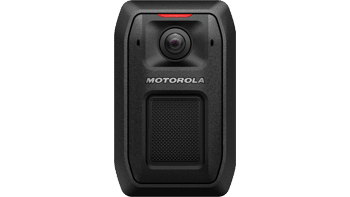
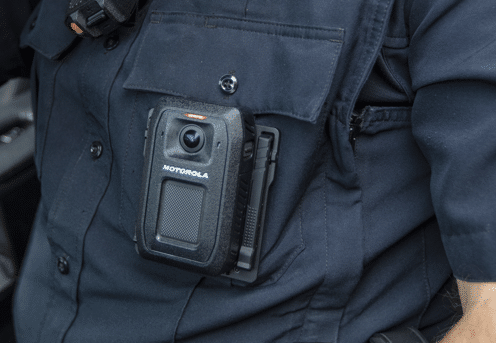
V700 body camera
Level up to the V700 Motorola body-worn camera designed to keep you connected throughout your shift with its LTE capabilities and seamless technology integrations.
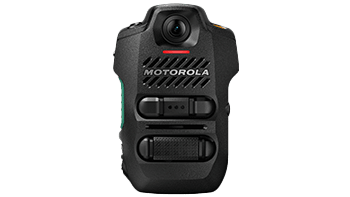
SVX video remote speaker microphone
Meet the evolution of video and voice, and minimize the amount of equipment you have to carry, with crystal-clear audio and footage captured in one device.
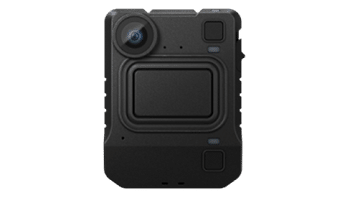
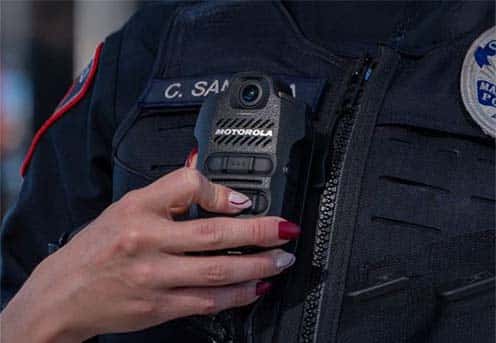
VB400 body camera
Ideal for small to mid-size police agencies or security applications, the VB400’s intuitive, rugged design makes it even easier to capture high-quality video evidence.
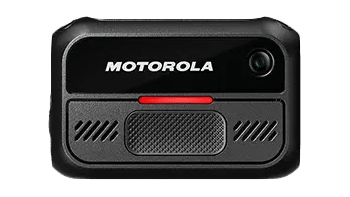
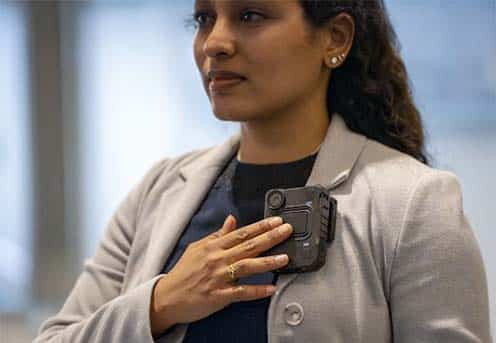
V200 body camera
The V200 Motorola body-worn camera is a sophisticated camera featuring livestream recording and GoLive Audio enabling employees to quickly connect with a supervisor while capturing footage.
When the stakes are high, your camera system should be ready to rise to the moment, not just survive it.
How Pro-Level Gear Stands Out
Evidence stays secure
Think encrypted transfers, detailed chain-of-custody logs, and storage options that meet department policy requirements—cloud or on-premise.
Cameras turn on when they need to
Some models are smart enough to activate automatically when your weapon is drawn, lights go on, or your radio is keyed up.
Battery life that doesn’t bail mid-shift
These cameras are built to help your radio last the whole shift, so you’re not scrambling for a battery at the worst moment.
The video holds up
Even in bad lighting or high motion, the footage stays sharp, so you’re not stuck explaining blurry frames later.
Curious if body-worn cameras make sense for your team?
These days, body-worn cameras are doing a whole lot more than just recording footage. They’ve evolved into full-on support tools tied into software, real-time networks, and systems that help departments run smoother, stay connected, and make quicker decisions out in the field.
Depending on how your setup’s configured, you might have access to features like:
Live Streaming
Supervisors can monitor field activity in real-time, providing backup or support as needed.
Real-Time Location Tracking
Know where your people are at any given moment, and replay the full context later.
Automatic Offload & Categorization
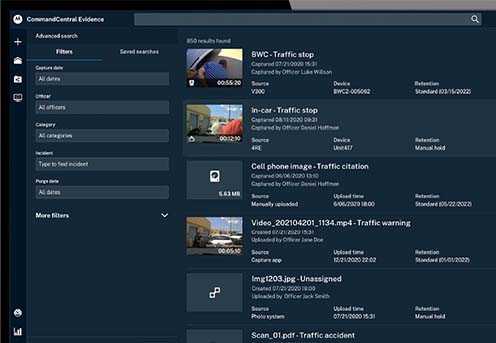
Footage uploads wirelessly to secure servers and gets tagged by time, location, and incident type saving hours of manual work
AI-Powered Search Tools
Quickly locate footage involving specific keywords, faces, or license plates.
Which features matter most for your environment? Prairie Mobile is here to help guide you.
At Prairie Mobile Communications, we understand that there’s no one-size-fits-all body-worn camera solution. What works for a municipal police department may not work for a private security firm or at a retail store. The needs of a fire department differ significantly from those of a corrections facility.
That’s why we start with a conversation, not a catalog. We take the time to understand your environment, policies, goals, and challenges. Then we help you build the right combination of:
Body-Worn Camera Hardware
Cloud-Based Or On-Premise Video Management Systems
Integrations With Dispatch, CAD, Or Access Control Platforms
User Permissions, Redaction Workflows, And Compliance Features
And of course, we offer complete lifecycle support—from installation and configuration to training and technical assistance. When you work with Prairie Mobile, you’re not just buying a camera. You’re investing in a more innovative, safer way to operate.
Ready to build a system that fits your people, your mission, and your budget?